
What Causes Moisture Issues in Basement Walls? Understanding Basement Wall Dampness and Solutions
Basement wall moisture happens when water or water vapor gets through foundation walls or pools against them, creating damp patches, musty smells, and visible stains. Knowing how moisture arrives — whether from groundwater and hydrostatic pressure outside, condensation inside, or capillary wicking through masonry — helps you find the right fix to protect both your home and your family’s health. This guide links the main causes of basement dampness to the signs you’ll see, quick checks you can do yourself, and the targeted repairs that stop recurring problems. GRDry Basement Waterproofing serves Grand Rapids with MI-licensed, insured crews who offer free, no-obligation inspections and match the right solution to the root cause. Keep reading to learn how hydrostatic pressure, poor drainage, foundation cracks, capillary action, and indoor humidity each show up — and which mitigation steps actually work.
This article breaks down hydrostatic pressure and groundwater seepage, how to tell condensation from active leaks, common exterior drainage failures and French drain options, interior moisture sources and prevention, and how to prioritize fixes so you know when a DIY step will do and when to call a professional waterproofing or foundation team.
What Is Hydrostatic Pressure and How Does It Cause Moisture in Basement Walls?
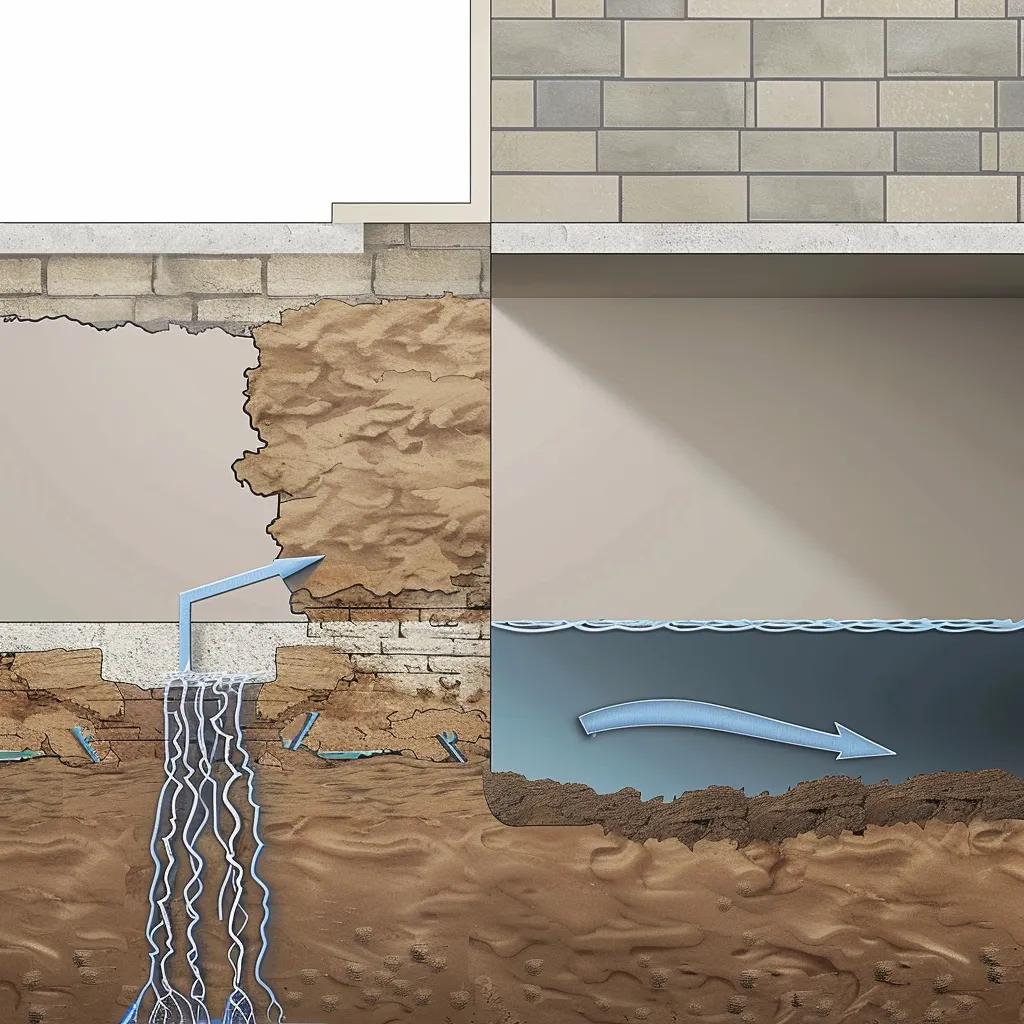
Hydrostatic pressure is the sideways force that saturated soil and groundwater put on foundation walls. When surrounding soils soak up water, that pressure pushes moisture toward the weakest path — often through tiny pores, hairline cracks, or mortar joints. Under heavy rain or rapid snowmelt this movement can become steady seepage or sudden inflows. Typical signs include persistent dampness near the footing, bubbling or flaking paint, and water that shows up after storms rather than only during humid days. Fixing hydrostatic pressure usually means keeping water away from the foundation (better exterior drainage), lowering the local water level (sump pumps), or giving water an interior path to a sump rather than letting it enter finished spaces.
Because hydrostatic pressure ties directly to how well the site drains, the most effective solutions mix good exterior grading, working gutters and downspouts, and interior sump/drain systems. When the work is beyond routine DIY, a professional waterproofing contractor can design a system that addresses the specific pressure source.
How Does Hydrostatic Pressure Push Water Through Basement Walls?
Hydrostatic pressure forces water through basement walls by creating a pressure difference: wetter soil outside the foundation holds higher pore-water pressure than the dry interior, so moisture moves toward the lower-pressure zone inside. Water finds its way through capillaries and tiny cracks in concrete, along block joints, or around pipe penetrations. As the groundwater rises, those tiny pores and cracks become active conduits, which is why homeowners often notice new damp spots after extended wet periods. Tracing the pressure path helps determine whether the right fix is exterior drainage, interior drainage and a sump pump, or structural crack repair.
That’s also why cosmetic patches fail: unless you reduce the outside pressure or provide a dependable drainage route, water will keep following the same path and re-expose the problem.
How Does Poor Drainage Increase Hydrostatic Pressure Around Foundations?
Poor exterior drainage raises hydrostatic pressure by letting water collect next to your foundation and saturate the soil. Negative grading, blocked gutters, and short or disconnected downspouts are common offenders. When runoff can’t move away from the house, the soil beside the foundation becomes a reservoir that increases lateral pressure on walls and footings, especially during repeated storms or seasonal thaw. Simple fixes — regrading to slope away from the house, extending downspouts, and keeping gutters clear — reduce the amount of water that reaches the foundation and lower hydrostatic load. If surface improvements don’t help because the groundwater stays high, a French drain or exterior waterproofing combined with interior drainage and a sump pump is often necessary.
Exterior drainage work ranges from straightforward homeowner tasks to larger professional installs; when the situation is complex, licensed waterproofing specialists can evaluate soils and recommend the appropriate French drain or excavation plan.
Why Does Condensation Form on Basement Walls and How Can It Be Prevented?
Condensation appears on basement walls when warm, humid indoor air meets a colder wall surface and the water vapor condenses into liquid. This is an indoor moisture-control issue rather than direct groundwater entry. Whether condensation forms depends on basement relative humidity, wall surface temperature, and air movement. During cool seasons or when walls stay cold, even moderate indoor humidity can create droplets or damp patches. Preventing condensation focuses on lowering indoor humidity, warming the wall surface via insulation, and improving airflow so moist air doesn’t sit on cold masonry. Practical steps include ventilation, a correctly sized dehumidifier, and insulating exterior walls or exposed pipes that act as cold surfaces.
Distinguishing condensation from seepage matters because the remedies differ: condensation usually needs moisture control (dehumidification, insulation), while seepage requires waterproofing and drainage work.
What Causes Condensation on Basement Walls?
Condensation on basement walls mainly comes from indoor moisture sources — laundry, showers, unvented appliances, or high soil moisture raising basement humidity — combined with cold wall surfaces that drop below the dew point. Concrete and masonry store cold and often stay cooler than living spaces, making basements vulnerable year-round. Simple homeowner checks include using a hygrometer to measure humidity, noting when dampness appears (after cooking or laundry vs. after rain), and a touch test: dampness that appears only with household activity usually indicates condensation. If you see damp patches without any obvious indoor trigger, inspect further to rule out hidden seepage.
Knowing the difference helps you choose the right fix: ventilation and dehumidification for condensation, drainage and waterproofing for seepage.
How Does Poor Ventilation and High Humidity Lead to Mold Growth?
Poor ventilation plus high relative humidity create the steady moisture mold needs to grow. Once mold takes hold it feeds on organic materials like wood, insulation, and some paints, producing visible growth and a musty smell. Mold typically becomes a problem when humidity stays above about 60% for long periods, though some species grow at slightly lower levels if moisture cycles are frequent. Mold can worsen allergies and respiratory issues and speed material decay, increasing repair costs. Preventive steps include keeping airflow moving, running a dehumidifier to hold humidity under 50%, insulating cold surfaces to stop condensation, and encapsulating crawl spaces or problem walls where moisture persists.
If ventilation and a dehumidifier can’t hold humidity because water keeps entering, professional encapsulation or waterproofing plus targeted remediation is usually required to remove the moisture source and stop repeat mold growth.
How Do Groundwater Seepage and Foundation Cracks Lead to Basement Wall Moisture?
Groundwater seepage and foundation cracks work together: groundwater presses against the foundation, and cracks or porous masonry give water a route inside. Water moves through the soil to the footing area; where the foundation has hairline cracks, open joints, or failing mortar, the water finds the easiest path in. Different crack types — shrinkage, settlement, or structural — need different responses: hairline cracks may be sealed with injections, while wider or stepped cracks tied to movement often need structural repair plus waterproofing. Porous concrete and block foundations can also transmit moisture via capillary action without obvious cracks.
Identifying whether groundwater pressure, an isolated crack, or broad porosity is the main issue guides the proper remedy: targeted crack injection, interior/exterior drainage and sump pumps for pressure-driven seepage, or excavation and surface treatments for severe problems.
What Role Do Foundation Cracks Play in Allowing Water Infiltration?
Foundation cracks act as direct entry points because they bypass solid concrete or masonry and let pressured groundwater or surface runoff flow inside. Hairline cracks often result from shrinkage or temperature shifts and can be handled with epoxy or polyurethane injection if they’re not structural. Stepped, wide, or movement-related cracks suggest settlement and should be evaluated structurally. Homeowners should document crack size and watch for progression, temporarily seal small cracks to limit interior wetting, and schedule a professional inspection if cracks grow or are accompanied by sticking doors or misaligned frames. Repair options range from noninvasive injections and interior sealants to full foundation stabilization and exterior waterproofing.
Getting the crack’s cause right prevents wasted effort on cosmetic fixes and ensures repairs stop both the leak and its underlying driver.
How Does Capillary Action Cause Water to Wick Through Basement Walls?
Capillary action pulls water through microscopic pores in concrete and masonry, letting moisture travel upward or sideways without visible cracks — this wicking often leaves white salt deposits (efflorescence) and dampness near the base of walls. Surface tension in tiny pores draws groundwater into the wall until an equilibrium is reached; painting or insulating over a damp wall without stopping the capillary flow traps moisture and can worsen symptoms. Look for persistent dampness a few inches above the floor, recurring efflorescence, and peeling paint concentrated at the wall base. Mitigation usually combines vapor-permeable interior coatings or proper vapor barriers, improved exterior drainage to reduce soil moisture, and waterproofing strategies that interrupt the soil-to-wall capillary path.
Fixing capillary-driven moisture most often mixes moisture-control products and interior drainage with exterior measures to lower the soil moisture feeding the system.
How Does Poor Exterior Drainage Cause Moisture Problems in Basement Walls?
Poor exterior drainage comes from everyday failures — clogged gutters, short downspouts, soil sloped toward the house, or damaged drain tile — and all cause the soil next to the foundation to stay wet and raise hydrostatic pressure. When surface water isn’t directed away, it pools at the foundation, saturates backfill, and increases pressure on basement walls. Solutions range from homeowner tasks like gutter cleaning and downspout extensions to professional regrading, drain tile repair, exterior French drains, or waterproof membrane installation. A whole-site approach that combines roof runoff management, positive grading, and subsurface drainage gives the most lasting protection against moisture and hydrostatic infiltration.
Because solving exterior drainage issues is often cost-effective, addressing them early can prevent more invasive and expensive interior repairs later.
How Do Defective Gutters and Improper Grading Direct Water Toward Foundations?
Faulty gutters and poor grading send water toward foundations by failing to catch and move roof runoff away and by letting surface runoff flow downhill to the footing. Clogged gutters overflow at the eaves, concentrating water at the foundation line, and settled or compacted soil can create a negative slope that channels rain to the house. A simple homeowner test is to run a garden hose around the perimeter to watch how water flows and check downspout discharge during a storm. Quick fixes include cleaning and repairing gutters, adding downspout extenders, and reshaping soil to ensure a positive slope away from the foundation; if moisture continues, professional regrading or drain installation may be needed.
Routine exterior maintenance reduces hydrostatic stress on the foundation and lowers the chance you’ll need invasive repairs down the road.
How Can French Drains Help Redirect Water Away From Basement Walls?
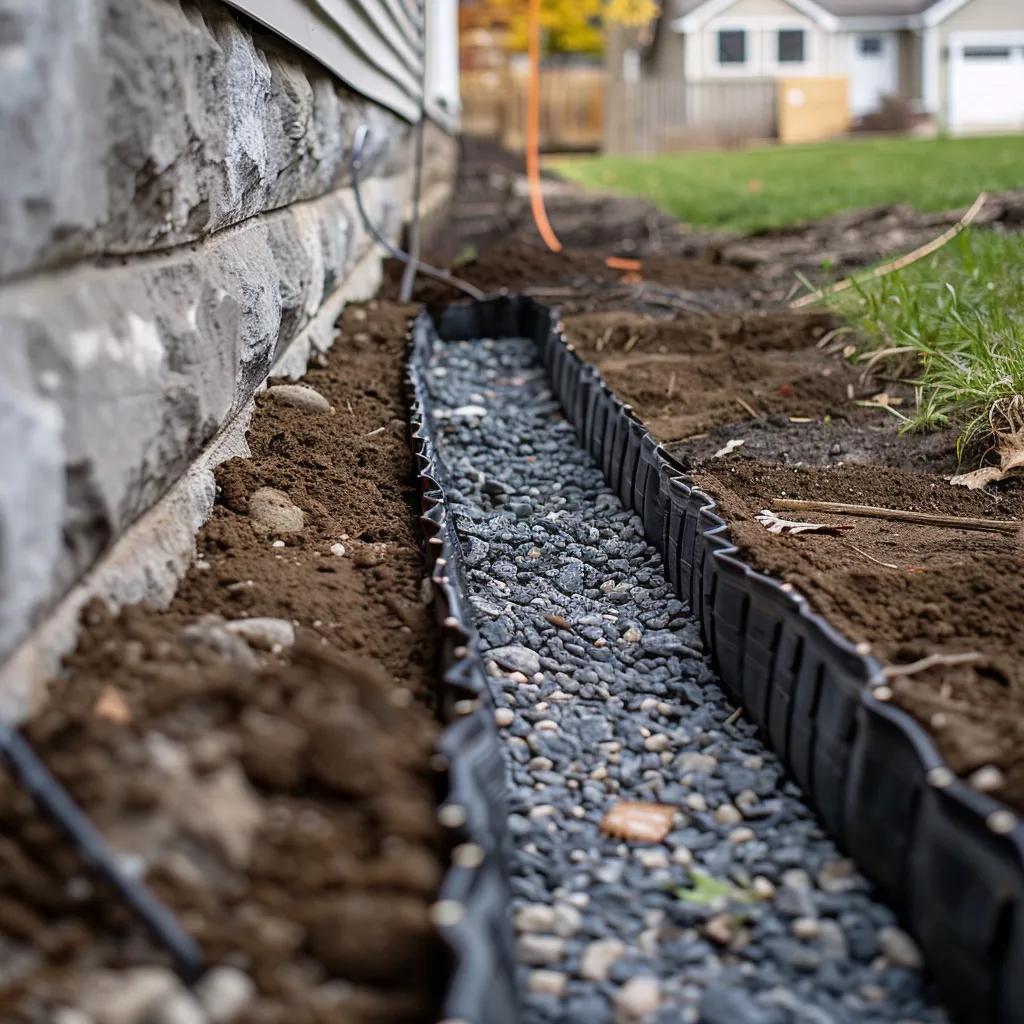
French drains are perforated pipes placed in gravel-filled trenches that collect and move subsurface water away from foundations. They work as exterior systems that stop water before it reaches the wall or as interior drain tile systems that capture seepage and carry it to a sump. Exterior French drains lower hydrostatic pressure at the source; interior systems are less disruptive when excavation isn’t practical. Each option has trade-offs in cost, disturbance, and long-term performance. The right choice depends on site conditions, soil permeability, and whether surface runoff or a high groundwater table is the main problem. A professional assessment ensures the design matches local soil conditions and the home’s needs — and quality installation determines how well it performs over time.
If you prefer a professional solution, GRDry Basement Waterproofing installs French drains and exterior waterproofing systems designed for local drainage patterns and foundation types.
What Interior Moisture Sources Contribute to Basement Wall Dampness?
Interior moisture sources include plumbing leaks, unvented dryers or appliances, regularly drying clothes indoors, and other household activities that raise relative humidity and feed condensation or mold on basement walls. These sources can cause short-term humidity spikes or chronic dampness that settles on cold masonry, so it’s important to distinguish interior generation from exterior intrusion with a few simple checks. Short-term homeowner steps include repairing leaks, properly venting appliances, and using a dehumidifier; longer-term options include crawl space encapsulation and improved ventilation. If interior sources persist after these steps, a professional inspection can check for hidden leaks, highly permeable masonry, or concurrent external water entry and recommend services like sump pump installation or crack repair when needed.
Separating interior humidity from exterior seepage helps you decide whether moisture control alone will work or if structural waterproofing is required.
How Do Plumbing Leaks and Unvented Appliances Increase Basement Humidity?
Plumbing leaks add liquid water directly, while unvented appliances (dryers, some combustion equipment) release warm, moist air into the basement — both raise the dew point and increase condensation risk on cold surfaces. To detect them, check the water meter for unexplained use, inspect exposed pipes and joints, and note whether dampness follows appliance use. Immediate steps include shutting off and repairing leaks, venting dryers and appliances to the outside, and isolating the source. Persistent or hidden leaks usually need a professional plumber. If plumbing repairs don’t stop wall dampness, there may be simultaneous exterior entry that requires waterproofing or added drainage.
Fixing interior moisture sources often delivers quick relief, but when symptoms continue, combining those fixes with exterior drainage measures creates a comprehensive defense.
What Preventative Measures Can Homeowners Take to Control Indoor Moisture?
Homeowners can take practical, high-impact steps to control indoor humidity and reduce basement condensation: repair leaks promptly, vent high-moisture appliances outdoors, keep baseline ventilation, and use a dehumidifier sized for the basement to keep relative humidity below 50%. Seasonal checks — cleaning gutters, regrading soil near the foundation, and insulating cold walls or pipes — also reduce the conditions that cause condensation and mold. Aim for 40–50% relative humidity and choose a dehumidifier rated for your basement’s square footage. If standard maintenance and moisture-control devices can’t keep levels in range, professional encapsulation or waterproofing can find hidden sources and provide long-term stability.
Consistent preventive maintenance and humidity management are the most cost-effective way to avoid repeat dampness and the larger cost of major repairs.
What Are the Signs and Risks of Moisture Issues in Basement Walls?
Moisture in basements shows up with familiar signs — musty smells, visible damp patches, flaking paint, efflorescence (white salt stains), mold growth, and wet or discolored carpets — that help you judge severity. The pattern of signs points to the cause: condensation tends to be transient and tied to indoor activity, while hydrostatic seepage is persistent and often appears at the footing after storms. Untreated moisture risks structural damage (rot, compromised framing), accelerated foundation issues, poorer indoor air quality, and health problems from mold exposure like allergies and respiratory irritation. Early detection and the right action — from better ventilation and dehumidification to professional waterproofing, crack repair, or sump installation — limit repair costs and protect occupants’ health.
If several signs appear together (for example, active wetting with structural cracks), get a prompt professional inspection to diagnose and stop progressive damage.
If you’re ready to address persistent moisture or aren’t sure what’s causing it, GRDry Basement Waterproofing offers free, no-obligation estimates and professional inspections. Our MI-licensed, insured team evaluates signs, matches causes to the right service — from sump pumps and interior drainage to French drains and crack repair — and can recommend financing options when larger work is needed.
- Use the signs above to triage urgency and next steps.
- Early intervention reduces repair complexity and cost.
- Get a professional inspection when signs persist or multiple indicators appear.
Spotting moisture early and linking it to the correct cause prevents escalation, protects health, and preserves your property value.
Frequently Asked Questions
What are the long-term effects of moisture issues in basement walls?
Left unchecked, basement moisture can cause serious structural damage — wood rot, weakened framing, and accelerated foundation deterioration — and encourage mold growth that harms indoor air quality. Mold can trigger allergies and respiratory problems for sensitive people. Over time these issues raise repair costs and can lower your home’s value, so acting quickly when you notice moisture is important.
How can I identify if my basement moisture is from condensation or seepage?
To tell condensation from seepage, watch when moisture appears. Condensation often shows up during humid weather or after indoor activities like laundry and is usually temporary. Seepage shows as persistent wet spots, frequently after heavy rain or snowmelt. A hygrometer helps: high indoor humidity with cold walls suggests condensation, while consistent dampness regardless of household activity points to seepage.
What are the best practices for maintaining basement humidity levels?
Keep relative humidity below 50% using a properly sized dehumidifier and ensure good ventilation. Fix any plumbing leaks and vent high-moisture appliances like dryers to the outside. Insulate cold surfaces to reduce condensation and monitor humidity with a hygrometer to make adjustments when needed.
When should I consider professional waterproofing services?
Call a professional if moisture persists despite DIY measures like dehumidification and ventilation, or if you see multiple warning signs such as mold, efflorescence, or structural cracks. Frequent flooding or a known high water table are also reasons to seek expert waterproofing for tailored, long-term solutions.
What are the signs that indicate I need to improve my basement drainage?
Signs include water pooling near the foundation, musty odors, and recurring damp spots on walls or floors — especially after heavy rain. Efflorescence is another clue that drainage is a problem. If you see these signs, inspect gutters and downspouts and consider professional evaluation to prevent ongoing damage.
How can I prevent mold growth in my basement?
Prevent mold by keeping humidity under 50% with dehumidifiers, ensuring proper ventilation, fixing leaks promptly, and venting moist appliances outside. Insulate cold surfaces to reduce condensation. If mold appears, remove the moisture source first and consider professional remediation to ensure complete removal and prevent recurrence.
What should I do if I find cracks in my basement walls?
Document cracks and monitor them. Small hairline cracks may be sealed with appropriate products, but larger, widening, or movement-related cracks require professional evaluation. If cracks are accompanied by water seepage or structural changes, contact a foundation or waterproofing specialist for a full inspection and repair plan.
Conclusion
Understanding why basement walls get wet gives you the power to act before small problems become big ones. Addressing hydrostatic pressure, poor drainage, and condensation can significantly reduce mold risk and structural damage. For tailored recommendations and dependable repairs, reach out to professionals who can assess your home and install proven waterproofing systems. Contact GRDry Basement Waterproofing to keep your basement dry, safe, and usable for years to come.